Green tea is one of the few foods where the case for a habit is largely epidemiological and largely from one country. Japanese cohort studies have followed tea drinkers for decades; the signal that emerges is consistent enough to take seriously. The harder question, which the recent literature has clarified, is whether what works in brewed tea also works when you concentrate its main catechin into a capsule. The short answer is no.

What the cohort data show
The Ohsaki study followed 40,530 Japanese adults for an average of 11 years and reported a dose-response relationship between green tea intake and lower cardiovascular and all-cause mortality. Adults drinking five or more cups per day had roughly 16 percent lower all-cause mortality and about 26 percent lower cardiovascular mortality than those drinking less than one cup.1 The effect was larger in women than men, which the authors hypothesized may reflect lifetime patterns of intake.
A 2016 meta-analysis pooled cohort and case-control data and found that three or more cups per day was associated with roughly a 10–20 percent reduction in stroke and coronary disease risk.2 Observational data on this scale cannot prove causation, but the consistency across populations is meaningful.
The active compounds
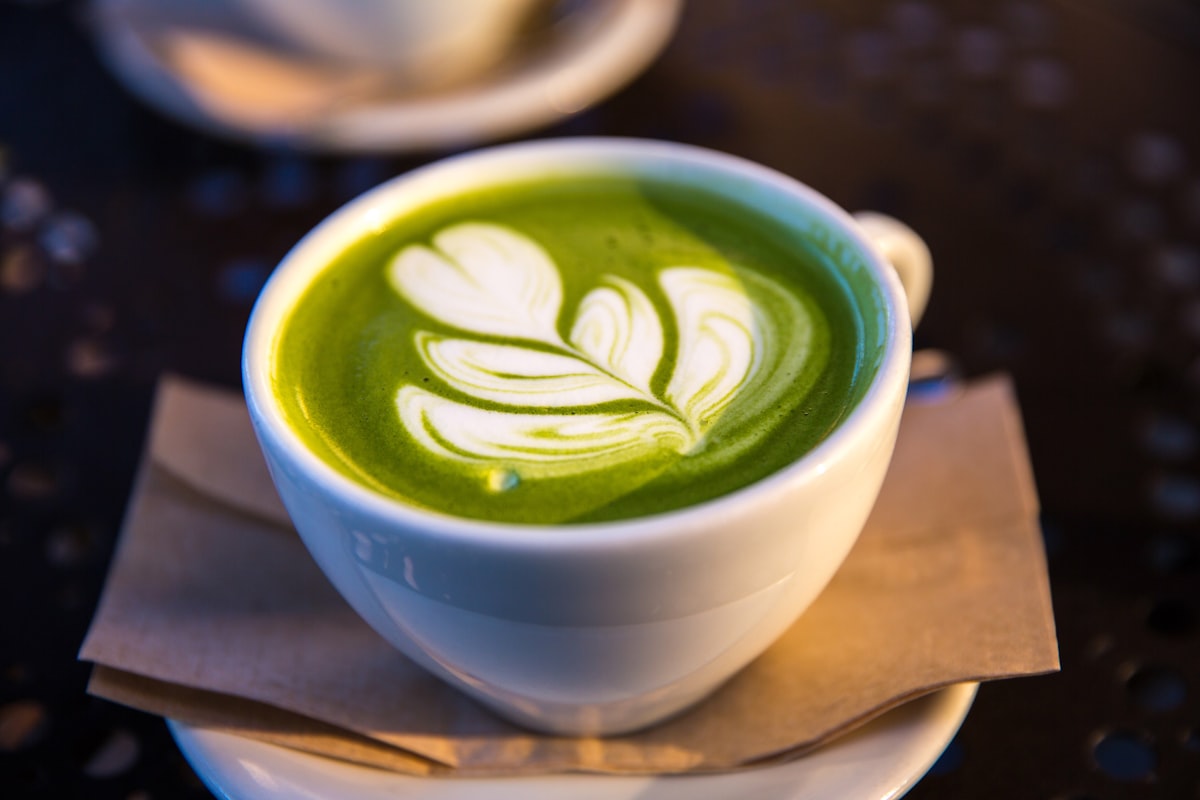
Green tea is roughly 30 percent polyphenols by dry weight, dominated by a class of catechins. The most discussed is epigallocatechin gallate (EGCG), which makes up about half of the catechin pool. EGCG and its cousins have antioxidant effects in vitro, induce expression of phase II detoxification enzymes, and modulate endothelial nitric oxide signaling — the latter is the best-established mechanism for the cardiovascular signal. A cup of brewed green tea delivers roughly 50–100 mg of EGCG; matcha delivers more per serving because you consume the whole leaf.
Green tea also contains L-theanine, the amino acid responsible for much of the “calm focus” experience that habitual drinkers describe. The acute cognitive effects of tea are more L-theanine plus caffeine than EGCG; a systematic review found small but reproducible improvements in attention and working memory after green tea, with longer-term cognitive effects less clear.3
The extract problem
Here the story gets more interesting. Concentrated EGCG extracts marketed as fat burners or “antioxidant boosters” have produced a meaningful safety signal: the European Food Safety Authority concluded in 2018 that doses of EGCG above 800 mg per day, particularly on an empty stomach, are associated with hepatotoxicity in case reports.4 The brewed-tea consumption that supports the longevity signal is well below that threshold. The high-dose capsule is not the same intervention as the cup.
There is also a milder issue with how green tea polyphenols interact with non-heme iron absorption — relevant if you are iron-deficient or vegan. Separating tea from iron-rich meals by an hour is enough to manage that.
What it can probably do
The defensible claims, in approximate order of evidence quality:
- Modest reduction in long-term cardiovascular and stroke risk at habitual intakes of 3–5 cups daily
- Small acute improvements in attention and working memory (largely via L-theanine and caffeine)
- Modest improvements in lipid markers (small LDL reductions in some trials)
- Possible reduction in some cancer incidence — observational signal exists for gastric and breast cancer, but randomized evidence is thin5
What it is not
Green tea is not a fat-loss intervention at any clinically meaningful magnitude — the trials that have tested it produce trivial effect sizes. It is not a cancer treatment, and concentrated EGCG capsules are not equivalent to brewed tea — they have a different risk profile and have caused liver injury. It is also not a stimulant on the order of coffee — a cup delivers roughly 30–50 mg of caffeine, a third to a half of an equivalent volume of brewed coffee.
The most defensible use is the simplest: drink a few cups of brewed green tea or matcha per day if you enjoy it, expect a small long-term cardiovascular benefit, and skip the high-dose extracts.