Most plant chemicals that get attention in the wellness press are vague antioxidants whose mechanisms are hand-waved. Sulforaphane is an unusually well-characterized exception. It is the isothiocyanate produced when you chew a piece of raw or briefly steamed cruciferous vegetable, and it activates a specific transcription factor — NRF2 — that turns on a coordinated set of detoxification and antioxidant genes. The mechanism is solid. The clinical translation is more cautious.
The chemistry, briefly
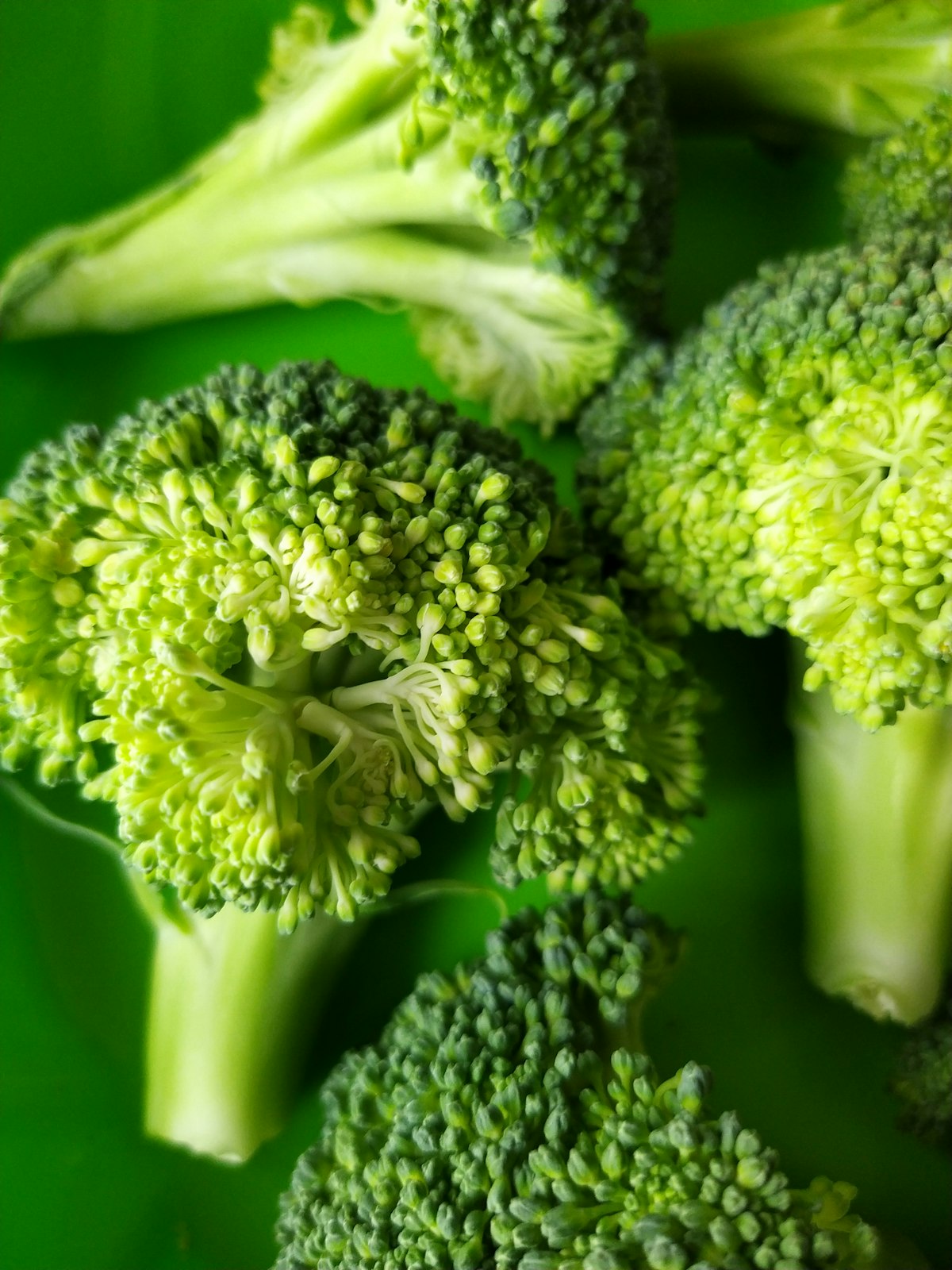
Cruciferous vegetables — broccoli, cabbage, kale, Brussels sprouts, cauliflower, arugula, watercress — store a precursor compound called glucoraphanin in their cells. They also store, separately, an enzyme called myrosinase. Chewing, chopping, or crushing the plant ruptures the cell compartments, brings glucoraphanin and myrosinase together, and produces sulforaphane within seconds.
This matters for cooking. Boiling broccoli destroys the myrosinase before the conversion happens, leaving you with glucoraphanin that your gut microbiota can partially convert but at much lower yield. Brief steaming — three minutes or so — denatures the chlorophyllase that bothers some people but keeps myrosinase active. The other workaround, if you have already boiled the broccoli, is to eat it with a source of fresh myrosinase: a sprinkle of mustard powder, raw daikon, or wasabi.
Fahey’s 1997 PNAS paper put broccoli sprouts on the map by showing that three-day-old sprouts contained 20 to 50 times the glucoraphanin of mature broccoli.1 Sprouts have been the workhorse of every serious clinical trial since, because they let researchers deliver a defined dose without needing pharmaceutical-grade isolates.
What human trials show
The Qidong air-pollution trial randomized 291 Chinese adults living in a heavily polluted region to a daily broccoli sprout beverage or placebo for 12 weeks. The active group rapidly increased excretion of conjugated metabolites of benzene (a known carcinogen) and acrolein (a respiratory irritant) — the NRF2-driven phase II detoxification system, doing exactly what biochemistry would predict.2 This is one of the cleanest demonstrations that a food can move a measurable toxin-handling pathway in real humans.
A 2012 Iranian trial gave 81 type 2 diabetics 10 g/day of broccoli sprout powder for four weeks and saw improvements in insulin resistance markers and oxidative stress, with the largest effects in the high-dose group.3 The result is consistent with NRF2 activation but the sample is small and short.
A 2014 PNAS trial in young men with autism spectrum disorder reported behavioral improvements on standardized scales after daily sulforaphane.4 The effect sizes were larger than expected and have not been robustly replicated; treat the finding as interesting hypothesis-generation rather than established.
A 2019 review summarized the pharmacokinetics, noting that bioavailability varies dramatically across broccoli supplements depending on whether the myrosinase is active. Sprouts remain the most reliable delivery vehicle.5
What it might do, beyond the mechanism
Cruciferous vegetable intake is associated in observational cohorts with lower incidence of several cancers — lung, colorectal, bladder — though the evidence is mixed and dose-response is hard to establish. NRF2 activation modulates inflammation through cross-talk with the NF-κB pathway, which is the plausible link to broader anti-inflammatory effects.
The honest framing: cruciferous vegetables are nutritious foods with one mechanism that is unusually well characterized, but most of the chronic-disease claims rest on epidemiology, not trials.
How to actually eat enough
A defensible weekly target is roughly five servings of cruciferous vegetables. If you want the higher sulforaphane density, add a small portion (20–40 g) of broccoli sprouts to a salad or sandwich several times a week. Sprouting your own is cheap — a few dollars of seeds and a jar — and means you control freshness. If you cook your broccoli, steam it briefly rather than boiling, and consider eating it with a cruciferous source of fresh myrosinase if you want to maximize the conversion.
What it is not
Sulforaphane is not a cancer treatment, and the autism trial does not mean broccoli sprouts cure autism. Concentrated sulforaphane supplements vary wildly in bioavailable yield and lack the long safety history of the food. Sulforaphane is also a hormetic activator — meaning the response is dose-dependent in a non-linear way — and the case for taking very high doses chronically is speculative.
The simplest position the trials support is the boring one. Eat cruciferous vegetables several times a week, throw in some sprouts, and don’t depend on a capsule to do the work.